On this page 14 sections
White-label digital marketing represents a pivotal opportunity for businesses to expand their services without incurring the costs and time required to develop them in-house. By adopting white-label solutions, companies can deliver expert services under their own brand, enhancing their market position and customer value proposition. This guide explores the strategic advantages of white-label digital marketing, highlighted through real-world case studies and insights into future industry trends.
Understanding White-Label Digital Marketing
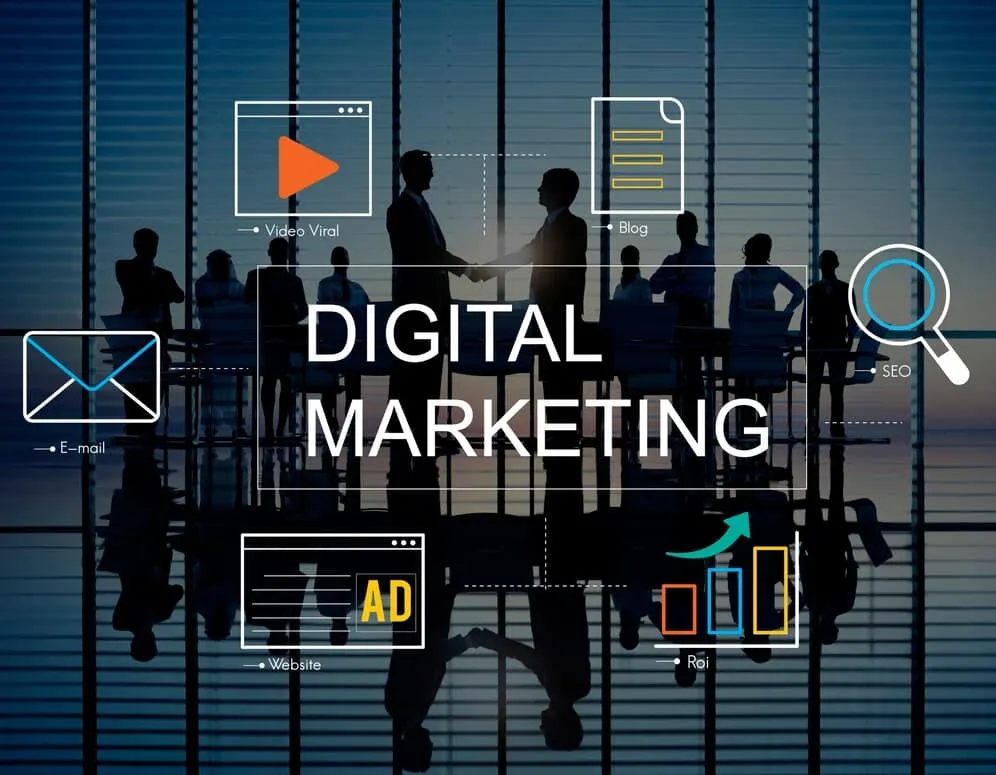
White-label digital marketing services are essentially rebrandable digital marketing solutions that companies can purchase and then present as their own. These services often include SEO, PPC, content marketing, social media management, and more. The primary appeal is that it allows businesses to offer additional services without needing to invest in new infrastructure or expertise.
Benefits of Choosing White-Label Digital Marketing
Cost Efficiency
Developing digital marketing tools and services from scratch is resource-intensive. White-label solutions provide a ready-made infrastructure that significantly reduces costs.
Quick Brand Expansion
White-label services enable businesses to quickly expand their offerings, thereby enhancing their competitiveness and appeal in their respective markets.
Focus on Core Business
By outsourcing complex digital marketing tasks, companies can focus on core business areas, improving overall efficiency and performance.
Read more: Unlocking Business Potential with White-Label Digital Marketing
Top Advantages of White-Label Digital Marketing Services
Scalability: Easily scales with your business growth without the need for additional resources or prolonged development times.
Expertise: Access to expert skills and technology that may be too expensive or complex to develop in-house.
Speed to Market: Faster launch times for new services to stay ahead of market demands and competitors.
Read more: Leveraging White-Label Digital Marketing for Business Growth
How White-Label Digital Marketing Boosts Your Brand
White-label digital marketing not only extends your service offerings but also enhances your brand's credibility and authority by associating with high-quality services. It allows businesses to maintain a consistent brand image while leveraging the expertise of specialists, ultimately leading to improved customer satisfaction and loyalty. Read more: How White-Label Digital Marketing Boosts Your Brand
Future Trends in White-Label Digital Marketing
As digital marketing evolves, so too do white-label solutions. Key trends include:
Integration of AI and Machine Learning: These technologies are being incorporated to automate tasks, enhance decision-making, and personalize marketing efforts.
Increased Demand for Specialized Services: As markets become more competitive, specialized services such as voice search optimization and augmented reality advertising are expected to rise.
Greater Emphasis on Data Security: With increasing scrutiny on data handling, white-label providers will prioritize advanced security measures to protect client data.
White-label digital marketing offers a pathway to growth for businesses looking to expand their offerings and enhance their market position. By leveraging these services, companies can capitalize on expert skills, save on costs, and focus on their core competencies, all while boosting their brand. Read more: Navigating the Future: Trends in White-Label Digital Marketing
How does a white-label marketing partnership work day to day?
Your agency sells and manages the client relationship, the partner produces the work under your brand, and the client deals only with you. A typical cycle runs like this:
You scope the work with your client and agree the deliverables, deadlines and price.
You brief the partner, including your templates, tone and any client-specific rules.
The partner produces the work and flags anything it cannot answer from the brief.
Your team reviews the work against your own standard before the client sees it.
You present the work and the results to the client in your own reports.
The step most agencies skip is the fourth one. The partner can produce the work, but the quality check has to sit with you, because your name is on the result. Reporting is where the brand shows most, which is why we wrote a separate guide to white label reporting that keeps your agency brand on every deliverable.
What should a white-label agreement cover?
A white-label agreement should cover confidentiality, ownership of the work, data handling, service levels and what happens when the partnership ends. Check that it includes:
A confidentiality clause covering your clients' names, data and pricing
A non-solicitation clause, so the partner cannot approach your clients directly
Transfer of ownership of the finished work to you, or through you to your client
Turnaround times, the number of revision rounds and how urgent requests are handled
Where your clients' data is stored, who can access it and how it is deleted
How the work, files and account access are handed back if you end the arrangement
Data handling deserves the most care if you serve clients in the EU. Under the GDPR, your client is usually the controller and your agency the processor, and Article 28 states that the processor shall not engage another processor without prior specific or general written authorisation of the controller. If the partner touches your clients' personal data, your client contracts need to allow subprocessors. Check those clauses with your own legal adviser. The partner-selection side of this is covered in choosing a white-label marketing partner as a UK agency.
Do you have to tell clients you use a white-label partner?
There is no single rule, but some platforms and data laws require a level of openness that branding alone does not change. Google's third-party policy for advertising partners says you should be honest and transparent about your company, services, associated costs, and expected results, and that third parties must make reasonable efforts to provide their customers with other relevant information when requested. The GDPR authorisation rule above applies whatever your brand says.
The workable approach is to keep the brand white-label and keep the obligations transparent. Your client sees your name on every deliverable, and your contract still discloses that you use specialist subcontractors where the law or a platform requires it.
How do you price white-label services and keep a margin?
Price from the value to your client and from your own full cost of delivery, not from the partner's price plus a fixed markup. Your margin has to pay for the work only your agency does:
Selling and scoping the account
Account management time and client meetings
Your own quality review and the revisions it triggers
Reporting, tools and software seats
The risk of late payment or a client leaving mid-contract
If a service only works at a thin margin once those costs are counted, raise the price, narrow the scope or leave that service out of your menu.
How do you test a white-label partner before you commit?
Test one service on one real piece of work, briefed exactly as you would brief a live client. Track three things: how long the work takes, how many revision rounds it needs and how the partner raises problems before the deadline. A partner that asks good questions early is worth more than one that delivers fast and misses the brief.
Pick a service with a clear standard for the trial. Paid search and SEO work well because the output is measurable, and our guides to effective strategies for white-label PPC management and white-label SEO services explain what good looks like in each.
ACXHUB works as a white-label partner from an office-based team in Cebu, with one Account Coordinator as your single point of contact and the finished work delivered under your brand. You can see how the partnership is structured on our white-label page.
Questions people ask
Which marketing services can be white-labeled?
Most production work can be: SEO, paid search, content, social media, design, video and web development. Strategy and the client relationship stay with your agency, because those are what the client is buying from you. For content, see proven strategies for white-label content creation.
Will my clients know I use a partner?
They will see your brand on the work and in the reports. Where a data law or an ad platform requires you to disclose subcontractors, do it in the contract rather than leaving it to be discovered.
Is white-label the same as subcontracting?
It is a form of subcontracting in which the work carries your brand instead of the partner's. The contract points are the same, with confidentiality and non-solicitation weighing more heavily.
Interested in exploring white-label digital marketing solutions for your business? Contact ACX Outsourcing HUB today to discover how our expert solutions can transform your service offerings and help you achieve remarkable growth and client satisfaction in the digital era. For more insights and to begin your white-label digital marketing journey, visit ACX Outsourcing HUB. Let us help you elevate your brand with our comprehensive digital marketing services.